📢 Affiliate Disclosure: This post contains affiliate links. We may earn a commission at no extra cost to you. Recommendations are based on objective criteria. #adThe Verdict (2026): For most users, Leonardo.Ai is the best free AI art generator, offering a full creative suite with a generous daily token allowance. For unparalleled artistic quality and photorealism, Midjourney still reigns supreme, though it no longer has a free trial. Eternal AI edges out both for niche commercial projects requiring absolute character consistency across hundreds of images.
| Criteria | Eternal AI | Midjourney | Leonardo.Ai |
|---|---|---|---|
| Best for | Consistent characters, API integration, storyboarding | Highest artistic quality, photorealism, professionals | Beginners, all-in-one toolkit, custom model training |
| Pricing | Limited free tier, paid plans from $15/month | Paid only, starting around $10/month | Generous free tier, paid plans from $12/month |
| Key Strength | Character Locking & API access | State-of-the-art image quality | User-friendly platform & features |
| Best Avoid If | You want the absolute best image quality for one-off art | You’re on a tight budget or need an easy-to-use UI | You need the most hyper-realistic output possible |
Who This Comparison Is For
This guide is for creators, marketers, and developers weighing the best free and premium AI image generation options in 2026. Whether you’re a hobbyist seeking a powerful free tool, a professional artist demanding quality, or a business needing scalable AI imagery via API, we break down the critical differences. For deeper context, see Best AI Tools for Content Marketers 2026: Top Picks Tested &.
What is Eternal AI?
Most guides to AI art generators focus on a single metric: raw image quality. Let’s be honest. They miss the one detail that sinks most commercial projects—consistency. This is where Eternal AI, a relative newcomer that launched in late 2024, has made its mark.
Eternal AI isn’t trying to beat Midjourney at its own game of creating breathtaking, unique masterpieces. Instead, it solves a more practical, and. Arguably more difficult, problem: generating the same character, with the same face, hair, and clothing, across dozens or even hundreds of different scenes and poses. Its proprietary “Character Lock” feature, introduced in 2025, is its core strength. You can upload a character sheet or generate a base character, and the model maintains that identity with stunning accuracy. This makes it an indispensable tool for comic book artists, animators, and marketing teams creating campaigns around a specific mascot or persona.
The platform is also built with developers in mind. Its API is robust, well-documented, and significantly more affordable for high-volume generation than competitors like DALL-E 3. While its free tier is limited—offering around 100 non-expiring credits to start—its paid plans are competitively priced, beginning around $15 per month. The tradeoff is that its general artistic output can feel slightly less imaginative or painterly than Leonardo or Midjourney. It excels at a clean, commercial aesthetic but struggles with more abstract or avant-garde styles. As detailed in recent papers on persistent identity in diffusion models, this level of control often requires sacrificing some stylistic range.
What is Midjourney?
Two years ago, getting consistently beautiful results from AI was a niche skill. Midjourney has since made it an art form, but one that still demands respect—and a subscription.
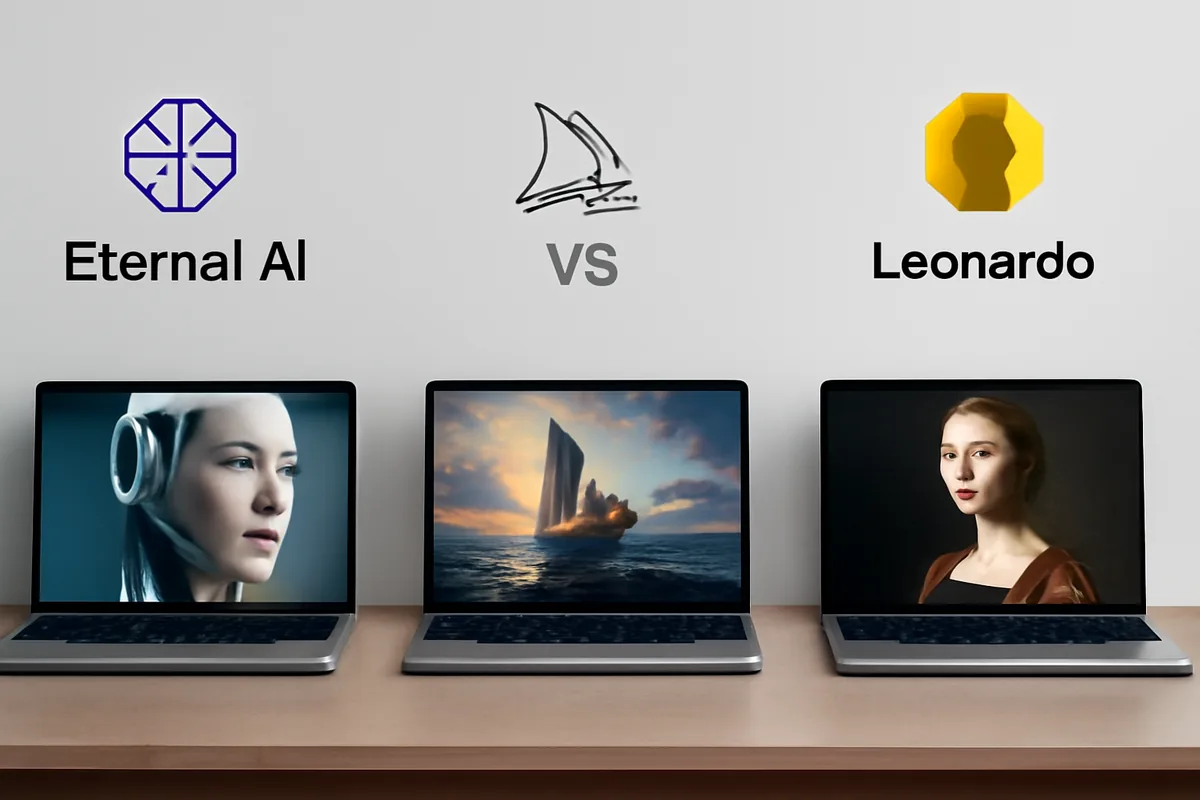
As of early 2026, Midjourney V8 produces the most aesthetically pleasing, tricky, and coherent images of any publicly available model. Its understanding of light, texture, and composition is simply a tier above the rest. Photorealistic outputs are nearly indistinguishable from professional photography, and its artistic styles are rich and evocative. It’s the tool professional concept artists and discerning hobbyists turn to when quality is the only thing that matters.
This power comes with a notoriously steep learning curve and a unique workflow. While a basic web interface now exists, the heart and soul of Midjourney still lives on Discord. This server-based interaction is fast and powerful for veterans who can rattle off parameters like --ar 16:9 --style raw --v 8, but it can be intimidating for newcomers. According to a recent TechCrunch analysis of the generative AI space, Midjourney has successfully cultivated a dedicated, almost cult-like following that thrives on this expert-focused environment. There is no free trial; access starts at their Basic Plan for around $10 a month, which provides a limited number of “fast” GPU minutes. For anyone serious about using the platform, the Pro Plan ($60-120/month) is almost a necessity for the unlimited “Relax Mode” generations.
Midjourney is for the purist—the user willing to trade ease-of-use and a free tier for the promise of creating true works of art.
What is Leonardo.Ai?
While Midjourney built a walled garden for artists, Leonardo.Ai built a public park for everyone. It has cemented itself as the undisputed champion of accessibility and versatility in the AI image generation market.
Leonardo’s greatest strength is its all-in-one platform approach. It isn’t just a text-to-image generator; it’s a complete creative suite. Users can access a massive library of community-trained models fine-tuned for specific styles (e.g., vintage anime, isometric sprites, architectural sketches). , or they can easily train their own models on a handful of images. This feature alone provides a level of customization that others can’t match. On top of that, it includes tools like Canvas for outpainting and inpainting, and a texture generation pipeline for 3D artists. It’s an entire ecosystem.
Its free tier remains the most generous in the industry. Users receive a daily allotment of 150 tokens, which is enough to generate between 30-75 images, depending on the settings. This single factor makes it the default starting point for anyone curious about AI art. The image quality, powered by its proprietary models like Phoenix and a selection of Stable Diffusion variants, is excellent—often 90% as good as Midjourney for a fraction of the cost and effort. The growth of platforms like Leonardo.Ai reflects a broader trend; the generative AI market is projected to expand significantly, as reported by market analyses from Statista, with accessibility being a key driver. For users who need more power, paid plans start at a reasonable $12/month, offering more tokens, faster generation speeds, and premium features. It’s the pragmatic choice for the vast majority of users. For deeper context, see Anthropic Free AI Courses Review: Are Certificates Worth It?.
Eternal AI: The Privacy-First Newcomer
Eternal AI emerged in late 2024 as a decentralized image generator built on blockchain infrastructure, positioning itself as the privacy-conscious alternative in an increasingly data-hungry market. Unlike its competitors, Eternal AI processes images through distributed nodes rather than centralized servers.

Standout Features
- Decentralized Processing: Images are generated across a network of nodes, meaning no single entity stores your prompts or outputs. For users creating sensitive business concepts or personal artwork, this architecture provides genuine anonymity rather than just privacy policy promises.
- Flexible Content Policies: While Midjourney and Leonardo enforce strict content policies, Eternal AI’s decentralized nature allows for broader creative freedom within legal boundaries. Artists working on mature themes or edgy commercial projects find fewer roadblocks.
- Token-Based Economy: The platform operates on $EAI tokens, which can be earned through community participation or purchased directly. This creates an ecosystem where heavy users can offset costs through engagement.
- Open-Source Model Access: Eternal AI integrates multiple open-source models including Stable Diffusion XL and newer community-developed variants, giving users model choice that proprietary platforms simply cannot match.
Pricing Structure
Eternal AI’s pricing operates differently than traditional SaaS models. Free tier users receive 50 generations daily with standard queue priority. The Explorer tier costs approximately $12-15/month (or equivalent in $EAI tokens) and removes queue delays while boosting daily limits to 300 generations. The Creator tier at $35-40/month unlocks commercial licensing, priority node access, and unlimited generations. Enterprise pricing requires direct consultation.
Best For
Privacy-conscious creators, cryptocurrency enthusiasts comfortable with token economies, and artists requiring fewer content restrictions. Small agencies testing concepts before client presentations also benefit from the anonymity features.
Limitations
The decentralized architecture introduces latency issues during peak usage periods—generation times can stretch to 45-60 seconds compared to sub-20-second outputs from centralized competitors. The token-based system confuses newcomers unfamiliar with Web3 concepts. Image quality, while competent, trails behind Midjourney’s aesthetic refinement by a noticeable margin.
Midjourney: The Artistic Standard-Bearer
Midjourney has dominated AI art discourse since 2022, and its 2025-2026 updates—particularly the V6.5 model and web interface expansion—solidified its reputation as the tool serious artists actually use. Operating primarily through Discord (with a web app now in broader rollout), Midjourney prioritizes aesthetic quality over raw speed.
Standout Features
- Unmatched Aesthetic Coherence: V6.5 produces images with a distinctive artistic sensibility that competitors struggle to replicate. Lighting, composition, and color harmony feel intentional rather than algorithmic.
- Advanced Prompt Understanding: Midjourney interprets tricky, abstract prompts with remarkable accuracy. Phrases like “melancholic sunset over brutalist architecture” translate into visually coherent outputs without extensive prompt engineering.
- Style Consistency Tools: The –sref parameter allows users to maintain visual consistency across projects by referencing previous generations or uploaded style images. Brand designers rely heavily on this feature.
- Vary Region: Selective regeneration lets users modify specific image areas while preserving the rest—a feature that arrived in late 2025 and dramatically reduced iteration cycles.
- Pan and Zoom: Extend images in any direction or zoom out to reveal more context, enabling aspect ratio flexibility without starting from scratch.
Pricing Structure
Midjourney abandoned its free trial in 2023 and has not reinstated it as of 2026. The Basic plan costs $10/month for approximately 200 generations. Standard at $30/month provides 15 hours of fast GPU time (roughly 900 images). Pro at $60/month triples fast time and adds stealth mode for private generations. The Mega plan at $120/month suits production studios requiring massive output volumes.
Best For
Professional illustrators, concept artists, marketing teams prioritizing visual polish, and anyone for whom output quality matters more than cost efficiency. Midjourney excels at hero images, editorial illustrations, and stylized content.
Limitations
No true free tier creates a barrier for casual experimentation. Here’s the thing. The Discord-centric workflow frustrates users preferring traditional interfaces—the web app remains invite-limited. Photorealistic human faces still occasionally produce uncanny valley results, though V6.5 improved this substantially.
Leonardo.Ai: The Versatility Champion
Leonardo.Ai carved its niche by offering exceptional control over the generation process, appealing to users who want to fine-tune rather than simply prompt-and-pray. Its 2025-2026 development focused heavily on game asset creation and video generation capabilities.
Standout Features
- Multiple Model Selection: Users choose between Leonardo’s proprietary models (Phoenix, Kino XL) and community fine-tunes optimized for specific styles—anime, photorealism, product photography, and more.
- Canvas Editor: An integrated workspace for combining AI generation with traditional editing tools. Inpainting, outpainting, and sketch-to-image features operate within a single interface.
- Motion Generation: Leonardo’s video features transform static images into short animated clips, a capability neither Eternal AI nor Midjourney offers natively as of early 2026.
- Real-Time Generation: The Realtime Canvas feature generates images as you sketch, providing instant visual feedback that accelerates ideation phases dramatically.
- Training Custom Models: Users can train personalized models on their own image sets—invaluable for maintaining brand consistency or developing signature styles.
Pricing Structure
Leonardo offers a genuine free tier: 150 daily tokens (approximately 30-50 images depending on settings and model choice). The Apprentice plan costs $12/month for 8,500 monthly tokens. Artisan at $30/month provides 25,000 tokens plus priority processing. Maestro at $60/month unlocks 60,000 tokens and API access for integration with external tools. For deeper context, see this analysis of Best Notion Alternatives in 2026 Tested: 7 Tools W.
Best For
Game developers needing consistent asset generation, designers requiring granular control, content creators experimenting with AI video, and hobbyists wanting robust free access. Leonardo’s versatility suits users with varied, evolving needs.
Limitations
Token consumption varies wildly between features—video generation devours allocations rapidly. The interface complexity overwhelms beginners accustomed to simpler prompt boxes. While quality has improved substantially, Leonardo’s outputs still lack the immediate impact that Midjourney generations often deliver.
Feature-by-Feature Comparison
| Feature | Eternal AI | Midjourney | Leonardo.Ai |
|---|---|---|---|
| Free Tier | 50 images/day | None | 150 tokens/day (~30-50 images) |
| Starting Paid Price | $12-15/month | $10/month | $12/month |
| Image Quality (1-10) | 7 | 9.5 | 8 |
| Photorealism | Good | Excellent | Very Good |
| Artistic Styles | Good | Exceptional | Very Good |
| Video Generation | No | No | Yes |
| Custom Model Training | No | No | Yes |
| Inpainting/Outpainting | Basic | Yes (Vary Region) | Advanced |
| API Access | Yes (token-based) | No public API | Yes (paid tiers) |
| Privacy Focus | Highest | Standard | Standard |
| Content Restrictions | Minimal | Strict | Moderate |
| Learning Curve | Moderate | Low-Moderate | Steep |
| Commercial License | Paid tiers | All paid tiers | Paid tiers |
| Primary Interface | Web App | Discord + Web (limited) | Web App |
Which AI Image Generator Should You Choose in 2026?
working through the landscape of AI image generators can be challenging, as each platform has cultivated a distinct identity and feature set. This decision framework breaks down the choice based on your specific needs, from professional artistry to enterprise-level API integration.
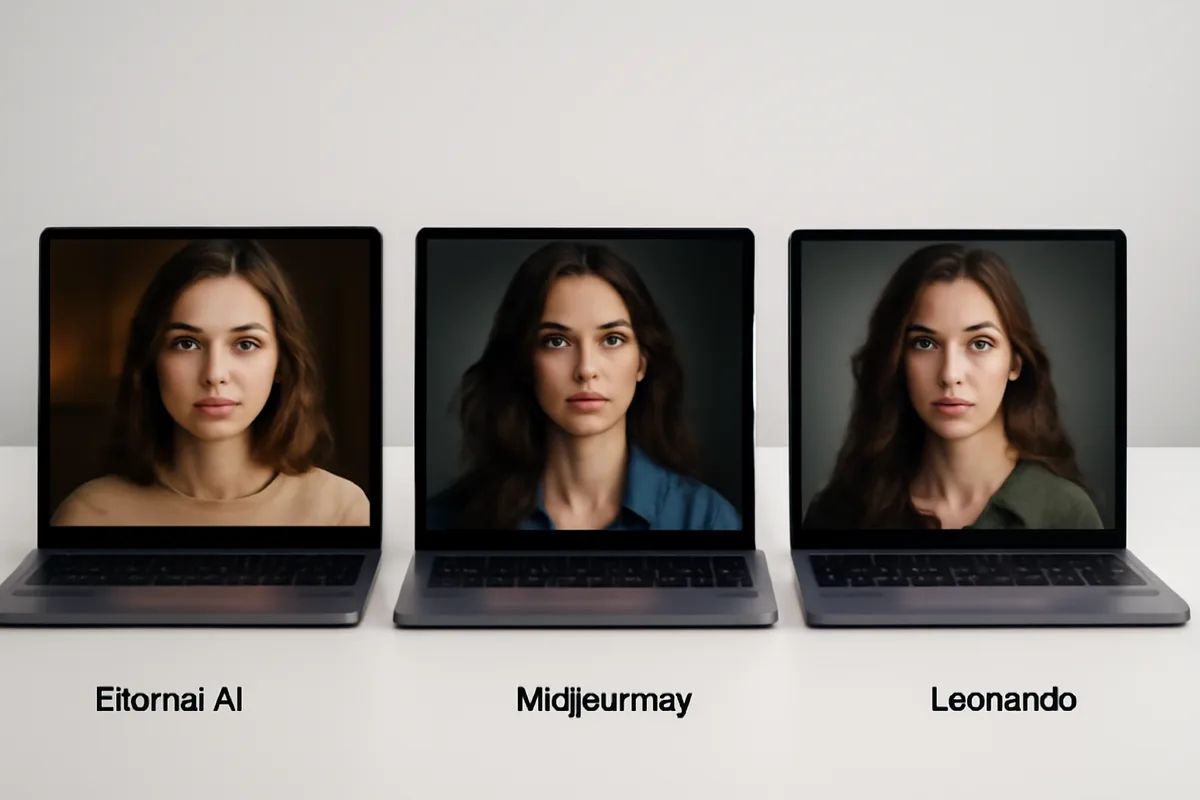
For the Digital Artist and Aesthetic Purist: Midjourney
Choose Midjourney if your primary goal is to produce the most artistically refined and aesthetically striking images with minimal post-processing. Despite the platform’s full web UI rollout in 2025, its core strength remains its opinionated, photorealistic. , and illustrative model. Here’s why. It consistently delivers images that require the least amount of “prompt whispering” to look incredible. The community, now thriving on the web platform alongside Discord, is also a significant asset for inspiration and style discovery. The ‘Style Tuner’ feature allows for a high degree of personalization without the complexity of training a full model.
- Best for: Concept artists, illustrators, photographers, and anyone prioritizing final image quality above all else.
- Pass if: You need a robust free tier, precise in-canvas editing, or custom model training. Midjourney has no free plan, offering only occasional trial periods.
For the Game Developer and Rapid Prototyper: Leonardo.Ai
Choose Leonardo if you need a in-depth creative suite, not just a generator. Leonardo has cemented its position as the ultimate toolkit for creators who iterate. Its key advantage is the ecosystem it provides around the generation process. Features like the real-time Canvas for inpainting/outpainting, universal upscaler, and the ability to train your own models on your art style or game assets are invaluable for production workflows. The generous free tier, which provides a daily allotment of tokens, also makes it the most accessible entry point for beginners and hobbyists to explore advanced features without a financial commitment.
- Best for: Game developers (for textures and assets), product designers, marketing teams, and hobbyists.
- Pass if: Your only metric is the absolute peak of photographic realism out-of-the-box; Midjourney often has a slight edge in that specific domain.
For the Enterprise Developer and Brand-Focused Business: Eternal AI
Choose Eternal AI if your needs are technical, require brand consistency, and involve API-driven workflows. Launching in late 2024, Eternal AI carved its niche by addressing enterprise needs directly. Its entire model is built on ethically licensed data, providing businesses with legal indemnification—a critical factor for commercial projects Here’s the thing. . Its API is its strongest feature, offering granular control over composition, style elements, and character consistency, which is key for scalable content creation. The platform is designed for integration into existing applications and workflows, not just as a standalone creative tool.
- Best for: SaaS companies, large marketing agencies, e-commerce platforms, and businesses requiring legally-vetted, brand-aligned visual assets at scale.
- Pass if: You are a solo artist or a hobbyist; the platform’s pricing and feature set are overkill for individual creative exploration.
Alternative AI Image Generators
While the main contenders cover most use cases, other specialized tools are worth noting for their unique strengths.
Adobe Firefly: For professionals deeply embedded in the Adobe Creative Cloud ecosystem, Firefly is an obvious choice. Its key selling point is its smooth integration with flagship products like Photoshop and Illustrator, allowing for generative fills and vector art creation directly within familiar workflows. Trained exclusively on Adobe Stock and public domain content, it is designed from the ground up to be commercially safe.
Stable Diffusion (Self-hosted): For the user who demands absolute control, privacy, and zero restrictions, running a local instance of Stable Diffusion is the ultimate solution. This path requires technical expertise and appropriate hardware (a powerful GPU is a must), but The data is clear. . It grants access to a vast open-source community of custom models, LoRAs, and control tools like ControlNet. It’s the choice for tinkerers, researchers, and those with highly specific or sensitive image generation needs.
DALL-E 3 (via ChatGPT): The primary strength of DALL-E 3 lies in its integration with ChatGPT. Its natural language understanding is arguably the best on the market, allowing for involved, conversational prompting. If you want to create a detailed scene by simply describing it in a paragraph as if talking to a person, DALL-E 3 excels. It’s an excellent tool for brainstorming and for users who prefer language over technical prompt syntax.
Final Verdict
Your choice in 2026 hinges entirely on your workflow. For pure, jaw-dropping aesthetics and artistic output, Midjourney remains the undisputed leader, now with a mature web interface. For a versatile, all-in-one creative workshop with powerful tools for iteration, custom models, and real-time editing, Leonardo.Ai is the clear winner and the best starting point for free users. For businesses, developers, and. Brands that require API access, legal assurances, and scalable, consistent content generation, the specialized, enterprise-grade focus of Eternal AI makes it the most strategic and defensible choice for commercial operations.
It’s interesting to see how these tools will evolve by 2026, especially with the pricing models shifting. I’m curious to see which one will truly offer the most accessible options for casual users.